CTEM for AI: How Exposure Management Must Evolve for Generative AI
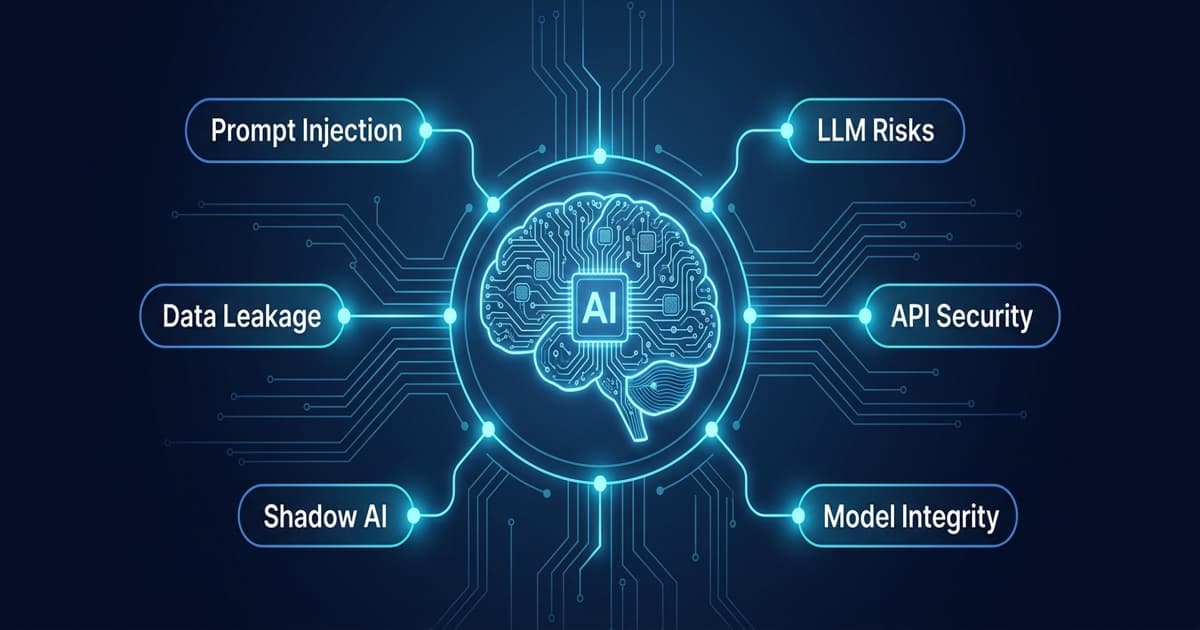
CTEM for AI is no longer a future concept. It is an urgent operational requirement for every enterprise deploying Generative AI at scale. As AI tools become embedded across business units, the traditional boundaries of exposure management are breaking down. Organizations that rely solely on legacy vulnerability management programs to secure their AI environments are leaving significant blind spots open to adversaries. This article explains why AI cyber risk management must be reimagined through the lens of Continuous Threat Exposure Management and how your organization can build a framework capable of addressing the full AI attack surface.
Key Takeaways
CTEM for AI extends traditional exposure management to cover AI models, training data, APIs, plugins, and shadow AI usage, addressing exposure categories that conventional security tools were never designed to detect.
Generative AI introduces distinct risk categories including prompt injection, sensitive data leakage, model manipulation, and AI supply chain vulnerabilities that require a purpose-built AI risk management framework to manage effectively.
Integrating AI governance with CTEM programs creates a unified approach to enterprise AI security that supports both compliance and responsible innovation across the full AI lifecycle.
What Is Continuous Threat Exposure Management (CTEM)?
Continuous Threat Exposure Management is a proactive security framework introduced by Gartner that helps organizations systematically discover, assess, validate, and remediate exposures across their entire attack surface. Unlike point-in-time assessments, CTEM operates as an ongoing cycle that gives security teams a real-time view of where the organization is most vulnerable. It covers infrastructure, cloud assets, identities, applications, and external attack surfaces in a structured and repeatable process.
The Core Principles of CTEM
CTEM is built around five interconnected stages. First, organizations discover all assets and potential exposure points. Second, they assess the risk context and severity of each exposure. Third, they validate whether exposures are genuinely exploitable using adversarial simulation. Fourth, they prioritize remediation efforts based on business impact. Fifth, they mobilize teams to implement controls and verify remediation. This continuous loop ensures that security posture is measured and improved on an ongoing basis rather than in periodic reviews.
How CTEM for AI Differs from Traditional Vulnerability Management
Traditional vulnerability management focuses primarily on known CVEs and patch management across IT infrastructure. It is largely reactive, dependent on scan schedules, and does not account for business context or exploitability. CTEM for AI, by contrast, validates whether a discovered exposure can actually be exploited in your specific environment and prioritizes remediation based on the actual risk to business operations. This distinction becomes critically important when applied to AI cybersecurity, where many risks do not appear in traditional CVE databases at all. To understand how this connects with broader enterprise security architecture, explore building unbreakable security architectures for the modern enterprise.
Why Generative AI Creates a New Exposure Landscape
According to the World Economic Forum, cyber risks associated with AI adoption are among the fastest-growing concerns for enterprise security leaders globally. Generative AI introduces an entirely new category of digital assets, from large language models and AI assistants to custom AI APIs and third-party AI platforms. Each of these assets carries its own set of exposure pathways that traditional security tools were never designed to detect or manage.
AI Applications and Assistants
Enterprise AI assistants, copilots, and productivity tools are being deployed rapidly across sales, finance, HR, and customer service teams. These tools often have access to sensitive internal data, customer records, and proprietary business processes. Without proper access controls, monitoring, and data classification, they become a significant source of uncontrolled data exposure. Many organizations deploy these tools without conducting a formal AI risk management framework assessment, creating gaps that adversaries can exploit. Understanding the scope of these risks is explored further in how generative AI software services are transforming IT operations and security in the UAE.
Large Language Models (LLMs)
Organizations are increasingly building or fine-tuning their own large language models using proprietary data. The OWASP Top 10 for LLM Applications identifies prompt injection, training data poisoning, insecure output handling, and supply chain vulnerabilities as the most critical risks in this category. These risks require specialized detection and validation techniques that go beyond what standard CTEM tools currently offer.
AI APIs and Third-Party Integrations
Most enterprise AI deployments rely on external APIs, third-party AI services, and model providers. Each integration point represents a potential entry vector for data exfiltration, unauthorized access, and supply chain compromise. Organizations often lack visibility into how these integrations handle sensitive data, what access permissions they hold, and whether they meet the organization's security requirements. This lack of AI exposure visibility is a foundational problem for security teams.
Shadow AI Usage Across Business Units
Microsoft research highlights that shadow AI, referring to the unauthorized use of AI tools by employees outside of IT governance, is one of the most persistent challenges in enterprise AI security. Business units adopt AI tools quickly to gain productivity advantages, often bypassing security review processes. This creates uncontrolled data flows, unmanaged AI assets, and compliance risks that are invisible to security teams without dedicated discovery capabilities.
The Five Major AI Exposures Organizations Must Address
Organizations do not simply have an AI problem. They have an AI exposure visibility problem. The following five exposure categories represent the most critical risk areas that an AI-aware CTEM program must address.
Prompt Injection Attacks
Prompt injection occurs when an attacker manipulates the input to an LLM to override its intended behavior, extract sensitive information, or cause the model to execute unauthorized actions. These attacks can be direct, targeting the model's system prompt, or indirect, embedding malicious instructions in content the model processes from external sources. Prompt injection is listed as the number one risk in the OWASP LLM Top 10 and represents a class of vulnerability with no equivalent in traditional infrastructure security.
Sensitive Data Leakage
Generative AI models trained on or given access to sensitive enterprise data can inadvertently expose that data through responses to ordinary user queries. Employees may also input confidential information directly into public AI platforms without understanding the data retention and training implications. IBM research confirms that AI governance and data protection are now top priorities for enterprise risk management programs, precisely because of this exposure pathway.
Unauthorized AI Access
AI systems often require broad access to enterprise data sources, APIs, and internal systems to function effectively. Without proper identity governance and least-privilege access controls, AI systems can become a pivot point for lateral movement within the enterprise. Enterprise cybersecurity services must include AI-specific identity and access management reviews as part of any comprehensive CTEM program. Organizations managing privileged access in AI environments should also review how cybersecurity SaaS companies in Dubai are redefining privileged access for modern enterprises.
AI Supply Chain Risks
Organizations depending on third-party AI models, datasets, and plugins are exposed to supply chain risks that can compromise the integrity of their AI systems. A tampered pre-trained model or a malicious plugin can introduce backdoors, biases, or vulnerabilities that are extremely difficult to detect through standard security scanning. These risks require dedicated supply chain validation as part of the CTEM workflow.
Model Manipulation and Abuse
Adversaries can attempt to manipulate AI models through adversarial inputs, model extraction attacks, or by exploiting weak API authentication to reverse-engineer proprietary model behaviors. Model abuse can lead to intellectual property theft, reputational harm, and the weaponization of enterprise AI systems against their own users. Detecting and validating these exposures requires specialized adversarial simulation capabilities that extend the traditional CTEM methodology.
Why Traditional CTEM Programs Miss AI Risks
Even well-structured CTEM programs fail to account for AI risks when they rely exclusively on traditional tooling and assessment processes. Understanding these gaps is the first step toward building a more capable framework for AI cyber risk management.
Limited Visibility into AI Assets
Most asset discovery tools are designed to identify network assets, cloud resources, and software applications. They do not have the capability to discover AI models, fine-tuned LLMs, AI APIs, embedded AI features within SaaS platforms, or the shadow AI tools that employees use outside of formal governance channels. Without comprehensive AI asset inventory, exposure management is fundamentally incomplete.
Lack of AI-Specific Risk Context
Risk scoring in traditional CTEM relies on CVSS scores and exploit availability databases. AI risks often have no CVE, no CVSS score, and no widely available exploit code. Assessing the risk of a prompt injection vulnerability or an insecure AI integration requires contextual judgment that standard risk frameworks are not yet equipped to provide automatically.
Static Security Assessments
Many organizations still conduct AI security reviews as point-in-time assessments, typically during initial deployment. However, AI models evolve continuously through retraining, fine-tuning, and updates to connected data sources. A security review conducted at deployment may be completely outdated within weeks, making continuous monitoring an absolute requirement for any effective AI risk management framework.
Incomplete Governance Processes
Gartner predicts that organizations without mature AI governance controls will experience significantly higher AI-related security incidents. Traditional CTEM programs typically do not include AI governance checkpoints, responsible AI policy enforcement, or AI compliance validation. This governance gap means that even technically secure AI systems may still pose unacceptable risks from a regulatory or ethical standpoint.
How CTEM Must Evolve for Generative AI
The evolution of CTEM for AI requires expanding both the scope and the methodology of exposure management to address the unique characteristics of AI systems. This is not about replacing existing CTEM programs. It is about extending them with AI-specific capabilities and integrating them with AI governance structures. For organizations already working on strengthening enterprise AI security, connecting CTEM with threat intelligence is a proven approach, as described in transforming predictive threat detection with cyber threat intelligence providers.
Continuous Discovery of AI Assets
AI-aware CTEM programs must include dedicated discovery processes for AI tools, models, APIs, plugins, and third-party AI services. This includes both sanctioned AI assets under IT governance and unsanctioned shadow AI tools used across business units. Discovery must be continuous because the AI landscape within any enterprise changes rapidly as new tools are adopted and existing ones are updated or expanded.
CTEM for AI Exposure Validation
Validating AI exposures means simulating real-world attack scenarios specific to AI systems, including prompt injection tests, adversarial input testing, and API security assessments. This validation phase must go beyond automated scanning to include manual testing by security experts familiar with AI-specific attack techniques. The goal is to confirm which exposures are genuinely exploitable in the context of your specific AI environment and business workflows.
AI Risk Prioritization
Not all AI exposures carry the same business risk. A prompt injection vulnerability in a customer-facing AI chatbot with access to payment data carries far greater risk than the same vulnerability in an internal tool with limited data access. AI-aware CTEM programs must incorporate business context, data sensitivity, and potential impact into their risk prioritization models to ensure that remediation resources are focused where they matter most.
Continuous Monitoring of AI Usage
NIST's AI Risk Management Framework emphasizes that continuous monitoring and lifecycle risk management are essential for AI systems. AI usage monitoring must track model behavior, data access patterns, API call volumes, and user interactions to detect anomalies that may indicate prompt injection, data exfiltration, or model abuse. This monitoring layer is analogous to behavioral analytics in traditional security operations but adapted for AI-specific risk indicators.
Integrating CTEM for AI with Governance Programs
CTEM for AI must be operationally connected to the organization's AI governance program. Security findings must feed directly into governance workflows, policy reviews, and compliance reporting. This integration ensures that AI risks are not managed in isolation by the security team but are visible to risk owners, compliance teams, and executive leadership as part of a unified AI security architecture.
Building an AI-Aware CTEM Framework
A practical AI-aware CTEM framework follows six operational stages that together create a continuous cycle of AI risk visibility and reduction.
Discover
Identify all AI tools, models, APIs, plugins, and shadow AI applications across the enterprise. Build and maintain a living AI asset inventory that captures data flows, access permissions, and integration points for every AI system in use.
Assess
Evaluate the risk and exposure pathways associated with each discovered AI asset. Apply AI-specific risk frameworks, including the OWASP LLM Top 10 and NIST AI RMF, to assess vulnerabilities, data exposure risks, and governance gaps.
Validate
Simulate real-world attack scenarios against your AI assets to confirm which exposures are genuinely exploitable. Conduct prompt injection testing, adversarial input simulation, API security assessments, and supply chain integrity checks.
Prioritize
Rank AI exposures by business impact, data sensitivity, and exploitability. Focus remediation resources on AI assets that are business-critical, customer-facing, or connected to sensitive enterprise data.
Remediate
Implement controls to reduce or eliminate validated AI exposures. This includes prompt guardrails, access controls, API security hardening, data classification policies, shadow AI governance, and vendor security reviews.
Monitor
Continuously track AI risk posture through behavioral monitoring, usage analytics, and periodic re-validation of AI assets. Integrate monitoring data into the CTEM cycle to ensure that new exposures are identified and addressed promptly.
The Role of AI Security Posture Management (AI-SPM)
AI Security Posture Management is an emerging discipline that complements CTEM by providing dedicated capabilities for managing AI-specific security posture. AI-SPM platforms offer AI asset inventory, model visibility, data exposure monitoring, and policy enforcement capabilities that integrate naturally with existing CTEM workflows. For enterprise cybersecurity services teams, AI-SPM provides the specialized tooling needed to operationalize AI-aware CTEM programs at scale.
Organizations investing in enterprise security platforms in the age of AI are increasingly incorporating AI-SPM as a foundational layer of their security architecture.
Key capabilities that AI-SPM brings to a CTEM program include continuous AI asset discovery, model behavior monitoring, training data exposure analysis, third-party AI vendor risk assessment, and automated policy compliance checks. When integrated with CTEM, AI-SPM closes the visibility gaps that make AI environments so difficult to secure using traditional tools alone.
How AI Governance and CTEM Work Together
Effective AI cybersecurity requires more than technical controls. It requires clear ownership of AI risks, defined governance processes, and continuous assurance that AI systems are operating within approved boundaries. When CTEM is integrated with AI governance, security findings directly inform risk ownership decisions, policy updates, and compliance reporting. This alignment is critical for organizations operating under emerging AI regulations in the UAE and globally.
Responsible AI practices require that security and governance teams collaborate on defining acceptable use policies for AI systems, reviewing AI deployments against regulatory requirements, and ensuring that risk findings are acted upon by accountable stakeholders. CTEM provides the operational engine for continuous assurance, while governance provides the framework that determines what 'secure and compliant' means for your specific AI environment. For organizations in regulated sectors, understanding cyber security solution governance and audit readiness in UAE enterprises is an essential starting point.
Preparing for the Future of AI Exposure Management
The AI threat landscape is evolving rapidly. Autonomous AI agents, multi-model environments, and agentic AI ecosystems are already emerging in enterprise settings. These systems introduce new exposure categories that current CTEM frameworks and tooling are only beginning to address. Regulatory oversight of AI is also increasing globally, with frameworks from NIST, the EU AI Act, and UAE-specific AI regulations placing new compliance obligations on organizations deploying AI systems.
AI-native attack techniques, including adversarial machine learning, model poisoning, and AI-assisted social engineering, are becoming more sophisticated. Organizations that invest now in building CTEM for AI capabilities will be significantly better positioned to respond to these emerging threats than those that wait for incidents to force action. The enterprises that treat AI exposure management as a strategic priority today are the ones that will be able to innovate with AI confidently and securely tomorrow.
Conclusion
CTEM for AI represents the evolution of exposure management for a world where Generative AI is a core part of enterprise operations. Traditional CTEM programs provide a strong foundation, but they must be expanded with AI-specific discovery, validation, monitoring, and governance capabilities to address the unique risks that AI introduces. Organizations that fail to make this evolution will face growing blind spots in their AI cyber risk management programs as their AI footprint expands. Unicorp Technologies partners with enterprises across the UAE to build AI-aware CTEM programs that deliver continuous visibility, validated risk prioritization, and governance alignment for every stage of the AI lifecycle. Securing AI with Zero Trust and managing identity risks is a critical next step for any organization ready to take AI security seriously.
As enterprise AI adoption continues to grow, organizations must also recognize that AI security is closely tied to the security of the cloud environments where these systems operate. Many AI models, data pipelines, APIs, and business applications rely on cloud infrastructure, making cloud security services an essential part of any AI exposure management strategy. Extending CTEM across cloud workloads helps security teams gain continuous visibility into AI assets, detect emerging risks earlier, and strengthen resilience against evolving threats. By aligning AI exposure management with cloud security, governance, and ongoing monitoring, enterprises can support innovation while maintaining a stronger and more resilient security posture.
Connect with our team to assess your AI exposure landscape and build a resilient framework for secure AI adoption.
Frequently Asked Questions
What is CTEM for AI and why does it matter for enterprises?

Why does Generative AI require a different exposure management approach?
How does CTEM help organizations secure AI systems?
What are the biggest security risks in Generative AI environments?
What is AI exposure management and how does it differ from traditional exposure management?
How can organizations identify AI-related risks they are not currently aware of?
What role does AI governance play in a CTEM program?
How can enterprises secure shadow AI usage across business units?
What is the difference between AI security and traditional cybersecurity?
How should organizations get started with building an AI-aware CTEM framework?