Data Protection Services: How to Prevent Cloud and Insider Data Leaks
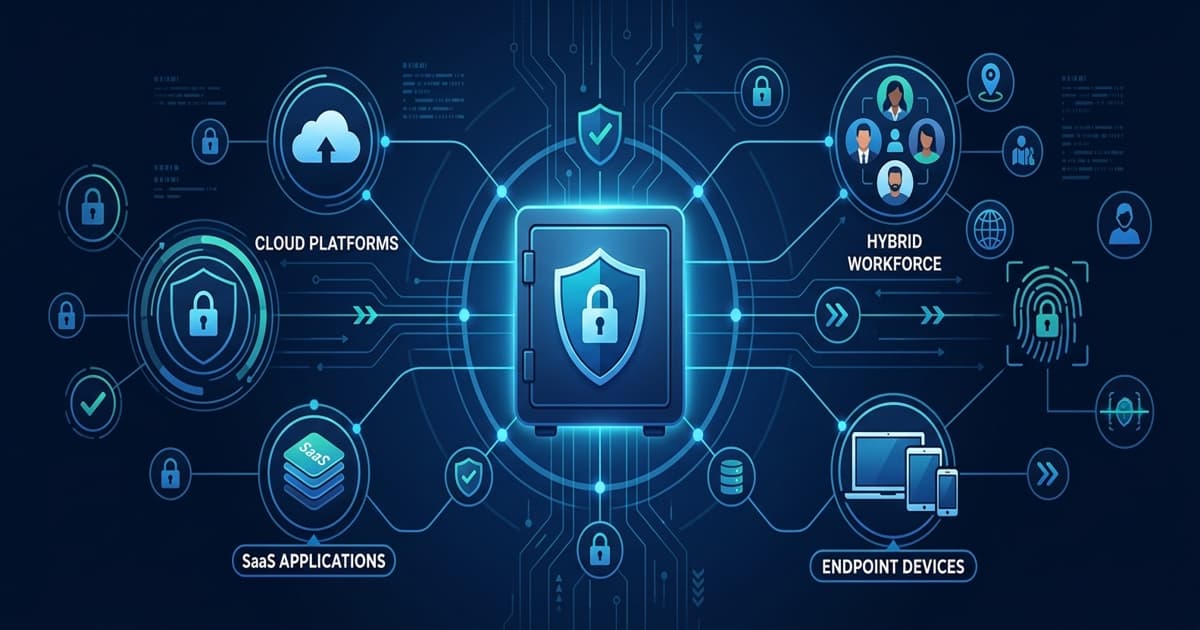
Data protection services have never been more critical for enterprises navigating complex, cloud first environments. As organizations migrate workloads to the cloud and empower hybrid workforces, sensitive information travels across dozens of applications, devices, and third party platforms. The risk of accidental exposure, insider incidents, and cloud misconfigurations grows with every new tool adopted. This article explores how modern enterprise data protection strategies combine people, processes, and technology to secure critical business information throughout its entire lifecycle.
Key Takeaways
Data protection services now require continuous visibility across cloud, SaaS, and hybrid environments, not just perimeter defenses.
Most enterprise data leaks stem from insider mistakes, misconfigured cloud storage, excessive permissions, and compromised credentials rather than sophisticated external attacks alone.
Integrating data loss prevention, DSPM, IAM, CASB, and Zero Trust into a unified strategy is the most effective way to reduce cloud and insider data leak risks.
Protecting cloud workload protection and SaaS applications requires purpose built controls that go beyond traditional network security tools.
Why Enterprise Data Protection Has Become More Complex
Modern enterprises no longer store data behind a single firewall. Information now lives across cloud storage, collaboration platforms, AI tools, and third party integrations. Each new environment introduces new exposure points that traditional security models were never designed to address.
Hybrid Workforces
Employees working from home, co working spaces, and corporate offices access sensitive data from multiple devices and networks. This distributed model makes it difficult to enforce consistent security policies. Without centralized visibility, security teams struggle to monitor who is accessing what data, from where, and under what conditions. Inconsistent endpoint controls further increase the risk of accidental data leakage.
Cloud First Business Applications
Organizations now rely on platforms like Microsoft 365, Salesforce, and Google Workspace as their primary business applications. These tools store contracts, financial records, customer data, and intellectual property in cloud environments that require specialized cloud security services rather than traditional on premises controls. Misconfigured sharing settings and overpermissioned accounts are common sources of unintended data exposure in these environments. Unicorp Technologies helps enterprises design and deploy cloud native security programs that address these modern challenges at scale.
SaaS Proliferation
SaaS data protection becomes increasingly difficult when security teams lack visibility into which applications are in use, what data they contain, and how they connect to core business systems. The average enterprise uses hundreds of SaaS applications, many adopted by individual departments without IT approval, creating shadow IT risks. This proliferation dramatically widens the organization's attack surface.
AI Powered Collaboration
AI assistants and productivity tools are being embedded into everyday business workflows. Employees routinely input sensitive business data into AI platforms to generate reports, summaries, and communications. Without proper governance, confidential information can be inadvertently exposed to external AI models or retained in ways that violate privacy regulations. Enterprise data protection must now account for AI driven data flows as a core governance requirement.
Third Party Ecosystems
Vendors, contractors, and partners frequently require access to internal systems and data. Managing third party access without creating excessive permissions is a persistent challenge. A compromised vendor account or an overpermissioned contractor can become an entry point for a significant data breach, as highlighted by the Verizon Data Breach Investigations Report, which consistently identifies third party and credential related incidents as major contributors to enterprise breaches.
Understanding Modern Data Leak Risks
Contrary to popular belief, most enterprise data leaks are not caused solely by external attackers. Understanding the full spectrum of internal and cloud related risks is essential for building effective data protection services.
Accidental Employee Mistakes
Employees misdirecting emails, sharing files with the wrong audience, or uploading sensitive documents to personal cloud storage accounts are among the most common causes of data exposure. These incidents are rarely malicious but can result in serious regulatory and reputational consequences. Human error remains one of the top contributors to data breaches, according to ongoing research from IBM's Cost of a Data Breach Report.
Malicious Insider Activity
Disgruntled employees, individuals planning to leave the organization, or those acting on behalf of competitors may deliberately exfiltrate sensitive data. These actors often have legitimate access to systems, making their activities harder to detect through traditional security tools. Behavioral analytics and continuous monitoring are essential countermeasures for identifying malicious insider patterns before significant damage occurs.
Compromised User Accounts
Attackers frequently target employee credentials through phishing, credential stuffing, and social engineering. Once inside, a compromised account can access cloud storage, email archives, and business applications with the same permissions as the legitimate user. Detecting compromised account activity requires monitoring for behavioral anomalies that fall outside normal usage patterns.
Cloud Misconfigurations
Improperly configured cloud storage buckets, overly permissive access policies, and publicly exposed databases continue to cause significant data breaches. Cloud environments are complex, and even experienced teams can inadvertently introduce misconfigurations during rapid deployment cycles. Automated posture management tools are critical for identifying and remediating these risks before they are exploited.
Shadow IT and Shadow AI
Employees frequently adopt unauthorized tools to improve their personal productivity. Shadow IT refers to applications used without IT knowledge or approval. Shadow AI extends this risk to AI platforms that employees use to process sensitive business information. Both create significant governance gaps that expose enterprise data to uncontrolled external environments.
What Are Data Protection Services?
Data protection services refer to the integrated combination of technologies, policies, and expert managed capabilities designed to discover, classify, monitor, and protect sensitive information across its entire lifecycle. Modern enterprise data protection goes far beyond endpoint antivirus or firewall rules. It encompasses a comprehensive framework that includes the following core capabilities.
Data discovery and classification: Identifying where sensitive data exists across cloud, on premises, and SaaS environments, then labeling it based on sensitivity and regulatory requirements.
Data Loss Prevention (DLP): Applying policies that prevent sensitive data from being transmitted, shared, or stored in unauthorized ways.
Encryption: Protecting data at rest and in transit so that even if intercepted, information remains unreadable to unauthorized parties.
Identity based access controls: Ensuring only verified, authorized individuals can access specific data based on their role and context.
Cloud monitoring and threat detection: Continuously observing cloud environments for suspicious activity, policy violations, and indicators of compromise.
Incident response and compliance support: Providing structured processes to contain breaches, notify stakeholders, and meet regulatory obligations.
Organizations that implement comprehensive data protection programs are better positioned to reduce breach costs, maintain customer trust, and demonstrate compliance with global data privacy regulations. Contact Unicorp Technologies to learn how a tailored data protection strategy can be built for your organization's specific risk profile.
Key Technologies That Prevent Cloud and Insider Data Leaks
Preventing cloud and insider data leaks requires deploying the right combination of purpose built technologies. Each tool addresses a specific layer of the data protection challenge.
Data Loss Prevention (DLP)
Data loss prevention solutions monitor data movement across endpoints, networks, email, and cloud applications. DLP policies can block sensitive data from being uploaded to personal storage, emailed externally, or printed without authorization. Modern DLP tools integrate with cloud platforms and SaaS applications to provide consistent policy enforcement regardless of where data travels. The NIST Cybersecurity Framework 2.0 emphasizes data protection and continuous monitoring as foundational security functions that DLP directly supports.
Data Security Posture Management (DSPM)
DSPM tools continuously discover and classify sensitive data stored across multi cloud and hybrid environments. They identify misconfigurations, excessive permissions, and unprotected data stores that could expose sensitive information. Gartner identifies DSPM as an increasingly important capability for organizations operating across complex cloud architectures, enabling security teams to maintain a clear, real time picture of their data security posture.
Cloud Access Security Broker (CASB)
CASB solutions act as intermediaries between users and cloud services, enforcing security policies for data accessed through SaaS applications. They provide visibility into shadow IT, detect anomalous behavior, and apply data protection controls to cloud based collaboration platforms. CASB is particularly valuable for enforcing consistent SaaS data protection policies across applications that security teams may not directly manage.
Identity and Access Management (IAM)
IAM frameworks control who can access which data and under what conditions. By enforcing least privilege principles, multi factor authentication, and role based access controls, IAM reduces the risk of both insider abuse and compromised account exploitation. Strong identity governance is a cornerstone of any modern enterprise data protection strategy. Organizations seeking to mature their identity programs can explore Unicorp's security leadership team to understand how expert guidance accelerates IAM program development.
Cloud Workload Protection Platforms (CWPP)
Cloud workload protection platforms secure workloads running in cloud and hybrid environments, including virtual machines, containers, and serverless functions. CWPP tools monitor runtime behavior, detect vulnerabilities, and enforce security policies at the workload level. They are essential for protecting the infrastructure layer where sensitive business data is processed and stored.
User and Entity Behavior Analytics (UEBA)
UEBA solutions establish behavioral baselines for users and systems, then alert security teams when activity deviates from normal patterns. This technology is particularly effective for detecting insider threats, compromised accounts, and data exfiltration attempts that traditional signature based tools would miss. UEBA adds a critical layer of intelligence to insider risk management programs.
Security Information and Event Management (SIEM)
SIEM platforms aggregate and correlate security events from across the environment, providing security operations teams with centralized visibility. By connecting logs from cloud platforms, endpoints, identity systems, and network devices, SIEM enables rapid detection of data related threats. Pairing SIEM with managed security services ensures continuous, expert led monitoring around the clock, reducing dwell time and accelerating incident response across the enterprise.
Protecting SaaS Applications and Cloud Workloads
SaaS platforms and cloud environments introduce unique security gaps that require targeted controls beyond traditional IT security approaches.
Microsoft 365 and Google Workspace are among the most widely deployed collaboration platforms. Both store enormous volumes of sensitive business data including emails, documents, spreadsheets, and meeting recordings. Common security gaps include overpermissioned sharing links, misconfigured guest access, and insufficient audit logging. Best practices include applying sensitivity labels, enabling DLP policies within the platform, and monitoring for unusual sharing or download behavior. Microsoft Security research consistently highlights oversharing and compromised identities as leading risks in cloud collaboration environments.
Salesforce and other CRM platforms contain customer records, financial data, and sales intelligence that are high value targets for both insiders and external attackers. Security gaps often arise from misconfigured field level security, excessive user profiles, and inadequate API access controls. Organizations should implement regular access reviews, enforce IP based restrictions where appropriate, and monitor API usage patterns to maintain strong SaaS data protection posture.
AWS, Microsoft Azure, and Google Cloud Platform require robust cloud native security controls. Common risks include publicly accessible storage buckets, overpermissioned service accounts, and insufficient logging. Cloud workload protection alongside continuous posture management helps organizations maintain secure configurations as their cloud environments scale and evolve.
How Zero Trust Strengthens Enterprise Data Protection
Zero Trust is a security philosophy built on the principle of never trust, always verify. Rather than assuming that users inside the network perimeter are safe, Zero Trust requires continuous verification of identity, device health, and access context before granting access to any resource.
The NIST Zero Trust Architecture (SP 800-207) recommends protecting resources through identity verification, least privilege, and continuous validation rather than relying on network location alone. For data protection services, Zero Trust translates into several practical controls.
Least privilege: Users receive only the minimum access required to perform their job functions, reducing the blast radius of a compromised account or insider incident.
Continuous verification: Access decisions are made dynamically based on real time signals including identity, device posture, location, and behavior.
Adaptive authentication: Higher risk access requests trigger additional verification steps, such as multi factor authentication or manager approval.
Data centric controls: Protection policies follow the data itself rather than relying on network boundaries, ensuring consistent enforcement across cloud, SaaS, and remote environments.
Continuous monitoring: All access activity is logged and analyzed to detect anomalies and policy violations in real time.
Best Practices for Preventing Data Leaks
Classify Sensitive Information
Organizations cannot protect what they cannot see. Implementing a comprehensive data classification framework allows security teams to identify sensitive information, apply appropriate protection controls, and prioritize resources based on data value and risk. Classification should be applied consistently across cloud, on premises, and SaaS environments.
Apply Least Privilege Access
Regularly reviewing and right sizing user permissions reduces the risk of both accidental exposure and deliberate insider abuse. Every user, application, and service account should have access only to the data required for their specific function. Excessive permissions are one of the most common and preventable contributors to enterprise data breaches.
Monitor Cloud Activity Continuously
Real time visibility into cloud activity is essential for detecting threats before they escalate. Security teams should monitor for unusual data downloads, unauthorized sharing, access from unfamiliar locations, and anomalous API calls. Continuous monitoring aligned with managed security services ensures that potential incidents are identified and investigated promptly.
Implement DLP Policies
Deploy data loss prevention policies that reflect your organization's actual data sensitivity and regulatory requirements. Policies should cover email, endpoint, cloud uploads, and collaboration platforms. Start with monitoring mode to understand data flows before enforcing blocking rules, and refine policies over time based on real world usage patterns.
Protect Cloud Workloads
Apply cloud workload protection controls to all production environments including containers, virtual machines, and serverless functions. Regularly scan for vulnerabilities, enforce runtime security policies, and ensure workload configurations adhere to industry benchmarks such as CIS Controls.
Educate Employees
Security awareness training should be practical, relevant, and ongoing. Employees who understand the risks associated with accidental sharing, phishing, and unauthorized tool use are significantly less likely to cause inadvertent data exposure. Training should be tailored to role specific risks and reinforced through simulated phishing exercises and policy reminders.
Conduct Regular Security Assessments
Periodic assessments of your data protection posture help identify gaps before attackers do. These assessments should evaluate DLP policy coverage, cloud configurations, identity governance, and incident response readiness. Organizations can engage Unicorp's cybersecurity team to conduct independent reviews and provide actionable remediation guidance tailored to your environment.
The Future of Enterprise Data Protection
The data protection landscape continues to evolve rapidly. AI powered DLP tools are becoming capable of understanding context and intent, not just pattern matching, enabling more accurate policy enforcement with fewer false positives. DSPM is expanding to provide continuous, autonomous discovery and classification across increasingly complex multi cloud environments.
AI driven insider risk detection is emerging as a critical capability for identifying behavioral patterns that precede data theft or sabotage. Autonomous cloud security tools are beginning to remediate misconfigurations in real time, reducing the window of exposure. Organizations must also establish governance frameworks for AI collaboration tools to prevent sensitive data from flowing into uncontrolled external AI environments.
Continuous data governance, supported by automated policy enforcement and real time visibility, will become the standard for organizations that need to balance security with the demands of modern, AI enabled business operations.
Conclusion
Data protection services have evolved into a business resilience priority for every enterprise operating in today's cloud first world. Preventing data leaks requires continuous visibility into sensitive information, strong identity governance, and integrated technologies that work together across cloud, SaaS, and hybrid environments. Organizations that invest in comprehensive, data centric security strategies are better positioned to reduce breach costs, maintain regulatory compliance, and support secure innovation. Connect with Unicorp Technologies through our contact page to build a resilient data protection program tailored to your organization's cloud and collaboration landscape.
Frequently Asked Questions
What are data protection services?

How can organizations prevent cloud data leaks?
What is Data Loss Prevention (DLP)?
What causes insider data leaks?
How does DSPM improve enterprise data protection?
How can organizations secure SaaS applications?
What is cloud workload protection?
How does Zero Trust improve data security?
What are the best practices for preventing insider threats?
Why is enterprise data protection important?