Why Privileged Identity Management Is Critical to PAM Strategies in 2026
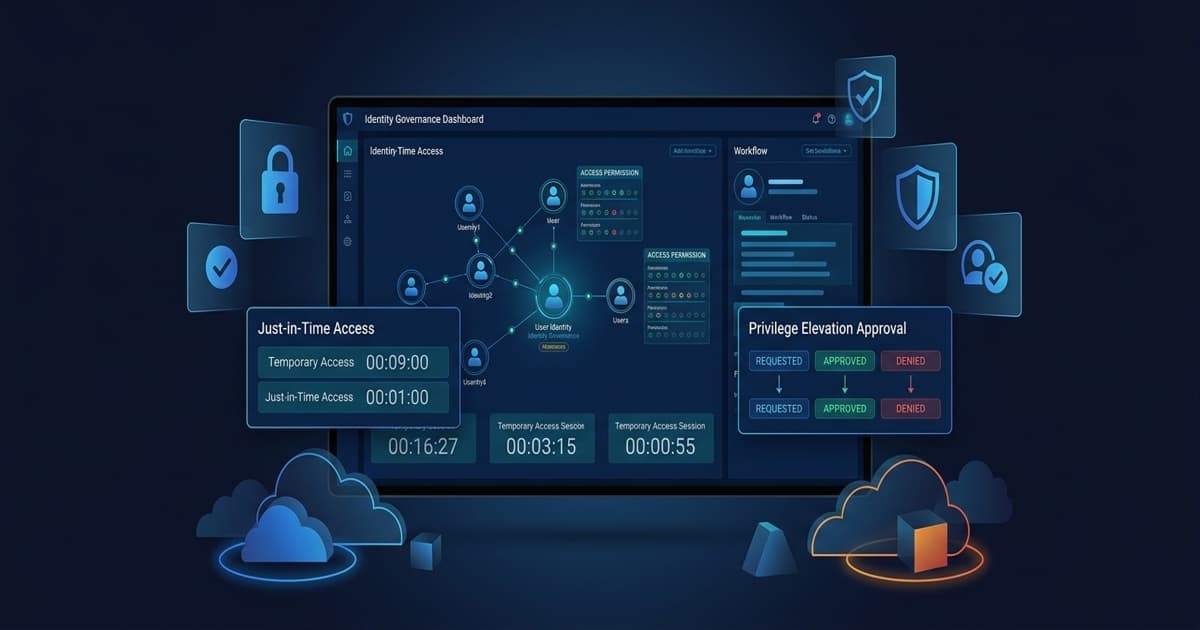
For years, organizations treated privileged identity management as an extension of traditional Privileged Access Management tools. That thinking is now dangerously outdated. Attackers are no longer breaking through firewalls. They are logging in using stolen or misconfigured privileged identities. As enterprises scale across cloud platforms, remote workforces, and AI-driven workflows, the attack surface has shifted dramatically from infrastructure to identity. In 2026, governing privileged identities is not optional. It is the foundation of resilient enterprise cybersecurity services.
Organizations that fail to evolve their PAM programs into true identity governance frameworks are exposing themselves to standing privilege risks, compliance failures, and lateral movement attacks that traditional security tools cannot stop. The integration of privileged identity management into every layer of the enterprise security stack is now a strategic imperative rather than an optional enhancement.
Key Takeaways
Privileged identity management has evolved beyond PAM tools to become a core component of identity-first security strategies in hybrid and multi-cloud environments.
Identity-based attacks are the leading cause of breaches globally, making Just-in-Time access, least privilege, and Zero Trust principles essential to modern PAM programs.
Organizations that integrate PIM with existing identity and access management frameworks will reduce insider threats, meet compliance requirements, and improve cyber resilience across cloud ecosystems.
The Evolution of Privileged Access Management
Traditional PAM Approaches
Traditional PAM solutions were built around a simple premise: lock down privileged accounts using vaults, session recording, and password rotation. These tools were highly effective in on-premises environments where the perimeter was clearly defined. Organizations could manage a finite number of admin accounts, enforce access controls, and audit sessions through centralized platforms.
For more than a decade, this approach provided adequate protection. Enterprises invested heavily in PAM infrastructure, and the results were measurable. However, the IT landscape has transformed in ways that legacy PAM architectures were never designed to handle.
Where Legacy PAM Programs Fall Short
Modern enterprises operate across multiple cloud platforms, SaaS applications, and hybrid infrastructure stacks. The number of privileged identities has exploded, including human users, service accounts, machine identities, and API credentials. Legacy PAM tools struggle to govern this complexity dynamically.
Static privileged accounts with standing access are now prime targets. According to IBM's Cost of a Data Breach Report, compromised credentials remain one of the most common initial attack vectors and are consistently associated with the highest breach costs. Legacy PAM systems were not designed to address ephemeral cloud identities, just-in-time access requirements, or identity governance at scale.
Why Identity Has Become the New Security Perimeter
Rise of Cloud-First Enterprises
Cloud adoption has fundamentally changed how privileged access works. In Microsoft Azure, AWS, and Google Cloud environments, identities serve as the primary access control mechanism. Every action, from spinning up a virtual machine to accessing sensitive data storage, is governed by an identity permission. Traditional network perimeters no longer apply in these environments.
Cloud security services in hybrid environments must now account for thousands of cloud roles, service principals, and federation identities that carry elevated permissions. Misconfigurations in these cloud identities represent some of the most exploitable vulnerabilities in modern enterprise environments.
Remote Workforce and Hybrid Infrastructure
The expansion of remote work has further complicated privileged access governance. IT administrators, DevOps engineers, and third-party vendors now require privileged access from distributed locations across varied network conditions. Traditional VPN-based access controls and on-premises PAM vaults cannot provide the dynamic, context-aware access management these environments demand.
Implementing secure remote access solutions that integrate with identity governance frameworks has become a critical requirement for organizations protecting hybrid infrastructure. Access decisions must now account for user behavior, device health, location risk, and session context simultaneously. A proactive cybersecurity posture requires that remote privileged access is governed by continuous verification rather than static authentication events.
Machine and Service Identities
Perhaps the most underappreciated challenge in modern privileged access is the proliferation of non-human identities. Service accounts, API keys, container workloads, CI/CD pipeline credentials, and robotic process automation bots all carry privileged permissions. These machine identities often outnumber human privileged accounts by significant ratios.
Most traditional PAM programs lack the capability to discover, classify, and govern machine identities at scale. This gap creates significant blind spots that sophisticated attackers actively exploit. Privileged identity management platforms address this challenge by extending governance controls to both human and non-human identity types.
What Is Privileged Identity Management?
Privileged identity management is a security discipline focused on governing, monitoring, and controlling the lifecycle of privileged identities across an organization's entire environment. While PAM focuses primarily on securing privileged accounts and sessions, PIM extends this protection to encompass the full identity lifecycle, including provisioning, role assignment, access reviews, and de-provisioning.
Core Capabilities of Privileged Identity Management
Modern PIM platforms deliver a comprehensive set of capabilities that address the limitations of legacy PAM approaches. These capabilities include Just-in-Time privilege elevation, time-bound access grants, automated access reviews, risk-based authentication challenges, identity analytics, and approval workflows for sensitive access requests.
Just-in-Time access ensures privileged permissions are granted only when needed and automatically revoked after use.
Approval workflows add human oversight to sensitive access requests, reducing unauthorized privilege escalation.
Risk-based authentication evaluates contextual signals before granting elevated access.
Session monitoring records and analyzes privileged activity for behavioral anomalies.
Automated privilege reviews continuously validate whether access entitlements remain appropriate.
Identity analytics detect unusual access patterns and potential insider threat indicators.
How PIM Differs from Traditional PAM
PAM focuses on securing the account and the session. PIM focuses on governing the identity behind the account throughout its entire lifecycle. PAM asks 'who has access?' PIM asks 'who should have access, when, and under what conditions?' This governance-first perspective aligns directly with zero trust security services principles, which mandate continuous verification rather than assumed trust.
Five Reasons PIM Is Critical to PAM Strategies in 2026
1. Growth of Identity-Based Cyberattacks
Identity-based attacks have become the dominant threat vector globally. The Verizon Data Breach Investigations Report consistently identifies credential abuse as a leading cause of security incidents. Attackers specifically target privileged identities because they offer the highest return on compromise. A single privileged account breach can provide lateral movement capabilities, data exfiltration access, and the ability to disable security controls entirely.
Organizations relying solely on traditional PAM tools without PIM governance are leaving critical identity attack surfaces unprotected. Strengthening privileged identity governance directly reduces the blast radius of credential compromise events.
2. Demand for Just-in-Time Privileged Access
Standing privileged access, where accounts hold elevated permissions permanently, represents one of the highest-risk configurations in enterprise environments. Every minute a privileged account holds standing access is a window of opportunity for attackers. Just-in-Time access models eliminate standing privilege entirely by granting elevated permissions only for the duration of a specific task.
This approach dramatically reduces the attack surface for insider threats and external attackers who have compromised privileged credentials. It also supports stronger audit trails because every access event is tied to a specific, time-bounded request.
3. Zero Trust Security Adoption
The NIST Zero Trust Architecture framework establishes continuous verification, least privilege access, and explicit access controls as foundational security principles. PIM is a direct implementation of these principles within the privileged access domain. Organizations adopting zero trust security services cannot achieve genuine Zero Trust without addressing how privileged identities are governed.
Privileged accounts represent the highest-value targets within any Zero Trust implementation. Without PIM controls governing how, when, and why privileged access is granted, Zero Trust initiatives remain incomplete regardless of how comprehensive the network and endpoint controls may be. You can explore how Zero Trust and AI cybersecurity intersect in managing identity risks for a deeper understanding of this convergence.
4. Compliance and Regulatory Pressure
Regulatory frameworks across industries are increasingly mandating stronger identity governance controls. Standards including ISO 27001, NIST CSF, SOC 2, GDPR, and sector-specific UAE cybersecurity regulations all require demonstrable controls over privileged access. Organizations without formal PIM programs face significant compliance gaps that carry both regulatory penalties and audit findings.
PIM platforms automate the evidence collection, access review documentation, and audit reporting that compliance programs require. This reduces the manual burden on security and compliance teams while improving the accuracy and completeness of audit artifacts. For enterprises navigating cyber security systems compliance requirements, PIM is increasingly a prerequisite. Understanding how cyber security systems define regulatory readiness across sectors in 2026 is essential for organizations building identity governance programs aligned with UAE mandates.
5. Cloud and Multi-Cloud Complexity
Microsoft's Security Intelligence reports consistently highlight the dramatic increase in identity-based attacks targeting cloud environments. Multi-cloud architectures introduce thousands of unique role definitions, permission boundaries, and federation trust relationships. Managing privileged access across AWS, Azure, and Google Cloud simultaneously requires the kind of unified identity governance that only modern PIM platforms can provide.
Cloud-native PAM tools often address only platform-specific privileged access. PIM solutions provide cross-platform governance that ensures consistent least-privilege enforcement, regardless of which cloud environment the identity is operating in.
How PIM Strengthens Enterprise PAM Programs
PIM does not replace PAM. It extends and strengthens existing PAM investments by adding identity governance capabilities that legacy PAM tools lack. Organizations that integrate PIM with their existing managed security services and PAM infrastructure gain several meaningful security improvements.
First, the overall attack surface shrinks significantly because standing privileged access is eliminated in favor of time-bound, purpose-specific access grants. Second, security teams gain far better visibility into who accessed what, when, and why, across both human and machine identities. Third, dynamic privilege management means access entitlements respond to changing risk signals in real time rather than remaining static until manually reviewed.
Risk-based access controls add an intelligent layer of verification that adapts to context rather than relying solely on static role assignments. Finally, audit readiness improves because PIM platforms automate the documentation and reporting processes that compliance audits require. Organizations building a resilient enterprise security platform in the age of AI will find that PIM is a critical layer in maintaining identity control as environments grow more complex.
Implementation Best Practices for Privileged Identity Management
Assess Existing Privileged Accounts
The first step in any PIM implementation is a comprehensive discovery and classification of all privileged identities across the enterprise. This includes human admin accounts, service accounts, shared credentials, cloud roles, API keys, and machine identities. Organizations are consistently surprised by the number of unmanaged privileged identities discovered during this process.
Apply Least Privilege Principles
Once privileged identities are cataloged, the next step is right-sizing access entitlements. Every privileged identity should hold only the permissions required for its specific function. Excess permissions should be removed immediately. Least privilege enforcement is both a security control and a compliance requirement under most major regulatory frameworks.
Integrate Privileged Identity Management with Existing PAM Platforms
PIM solutions work most effectively when integrated with existing PAM infrastructure, identity and access management platforms, and SIEM tools. This integration creates a unified privileged access governance framework where session recording, identity analytics, and access reviews operate from a single, consistent data layer. Organizations should also consider how penetration testing validates the effectiveness of privileged access controls by simulating real-world attack scenarios against the PIM-governed environment.
Continuously Review and Audit Access
Privileged access entitlements should be reviewed on a regular cadence, not only during annual compliance cycles. Automated access reviews within PIM platforms can flag anomalous entitlements, dormant accounts, and policy violations continuously. This approach ensures that the principle of least privilege is maintained dynamically rather than only at point-in-time audit intervals.
The Future of Identity-Centric Security
The convergence of PAM, identity and access management, and PIM is accelerating. Gartner predicts that identity-first security strategies will become a primary cybersecurity investment area as enterprises advance their Zero Trust maturity. AI-driven identity protection will enable continuous trust evaluation based on behavioral signals, device posture, and access context rather than static authentication events.
Identity Threat Detection and Response capabilities are emerging as a critical complement to PIM, enabling organizations to detect identity-based attacks in real time and respond before significant damage occurs. The organizations investing in this capability today will be substantially better positioned against the identity threats of tomorrow.
Conclusion
Privileged identity management is no longer a supplementary security capability. It is a foundational component of enterprise identity security in 2026. As identity-based attacks grow more sophisticated, cloud environments multiply privileged identities at scale, and compliance mandates tighten, organizations that rely solely on traditional PAM tools are accepting avoidable risk. Integrating PIM with existing PAM and identity and access management infrastructure reduces the attack surface, improves compliance posture, and enables genuine Zero Trust security at the privileged access layer.
Unicorp Technologies helps organizations implement modern privileged identity management and PAM solutions that reduce cyber risk, support Zero Trust initiatives, and improve compliance readiness across hybrid and multi-cloud environments. Connect with our cybersecurity consultancy and managed services team to assess and modernize your identity security framework today.
Frequently Asked Questions
What is Privileged Identity Management?

How is PIM different from PAM?
Why is PIM important in Zero Trust security?
What are the benefits of Privileged Identity Management?
How does PIM reduce cyber risk?
Can PIM improve compliance readiness?
Why are enterprises adopting PIM in 2026?
How does Just-in-Time access work in privileged identity management?
What industries in the UAE benefit most from privileged identity management?
How do machine identities fit into a privileged identity management strategy?